🌴CeylonMap

Negombo

Western Β· Western Province

✦ Experiences & ActivitiesπŸ“ Nearby Destinations

Negombo: The Gateway Town of Lagoons, Churches and the Morning Catch

Negombo is a lively fishing town on Sri Lanka's west coast, just 10–12 km β€” about 15 to 20 minutes β€” from Bandaranaike International Airport, which makes it the natural first or last stop of almost any Sri Lankan journey. Known affectionately as "Little Rome" for its many Catholic churches, it's a place of golden-sand beaches, a bustling dawn fish market, a broad lagoon threaded with Dutch-era canals, and some of the freshest seafood on the island. Its beach season runs roughly November to April, though the markets, waterways and churches reward a visit at any time of year.

History

Negombo's story is written in cinnamon and the sea. Long a coastal settlement of Arab and Moor traders, it became a prize the moment Europeans arrived, for the finest cinnamon in the world grew in the marshes around it.

The Portuguese came in the early 1600s, built a fort and spread Catholicism so successfully that the town earned its "Little Rome" nickname. The Dutch seized Negombo in the 1640s, prized it as a cinnamon port, and cut the network of canals that still lace the town β€” waterways once heavy with spice barges. The British, taking over in 1796, extended these into the long Hamilton Canal.

Negombo remains the largest Catholic town in Sri Lanka, its skyline punctuated by church spires and its lanes lined with shrines β€” a legacy of four centuries of Portuguese and Dutch influence.

Through it all, one thing never changed: the fishing. Negombo's Karava fishing community and their outrigger canoes have worked the lagoon and the sea for generations, and that daily rhythm of nets and boats is still the town's beating heart.

What to See

Negombo Beach

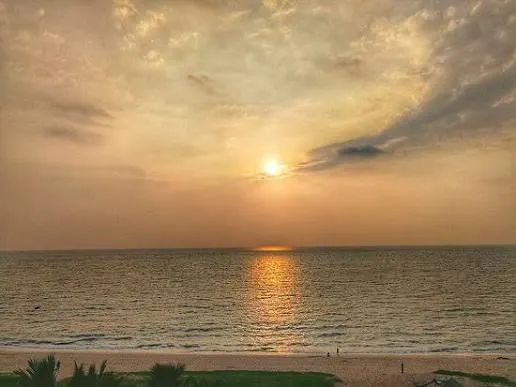
A long, golden strand backed by resorts, guesthouses and seafood restaurants, Negombo Beach is the town's easygoing front porch. It's not the pristine sand of the south coast, but it's pleasant, convenient and made for a first-day swim or a last-evening sunset with a cold drink in hand.

The Fish Market (Lellama)

Negombo's dawn fish market is the town at its most vivid β€” a riot of colour, noise and silver catch as fishermen auction tuna, mackerel, squid and shark, and racks of fish dry in the sun nearby.

Arrive between 5 and 7 AM to catch the auction in full swing. Wear shoes you don't mind getting wet, and carry small cash if you'd like to tip a fisherman for a photo.

Negombo Lagoon & the Dutch Canal

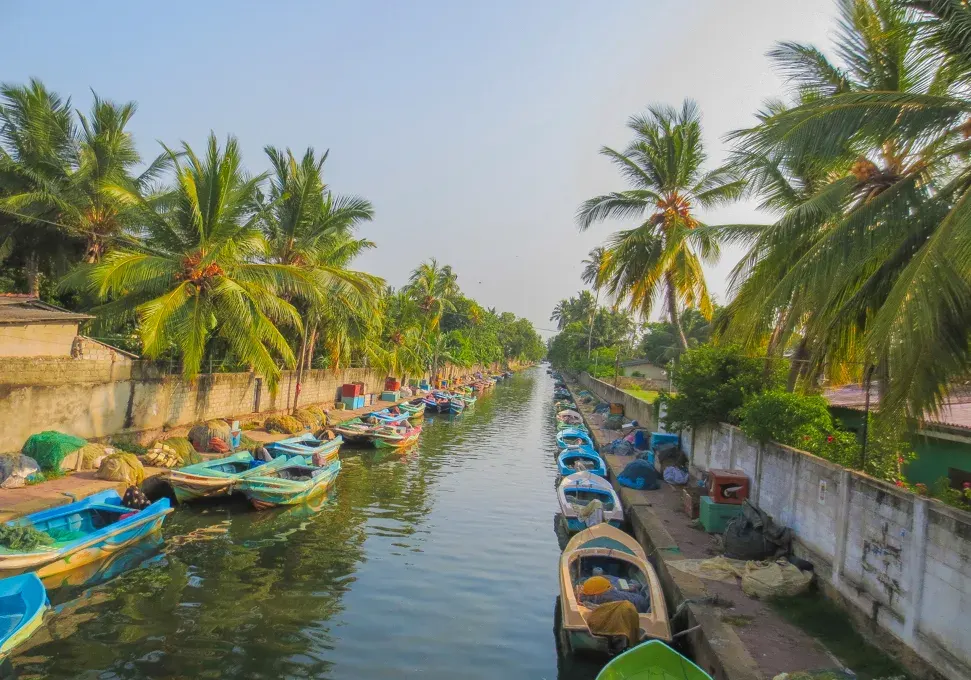
The wide, shallow lagoon is a world of fishing boats, mangroves and birdlife, best explored by boat. The historic Dutch Canal (the Hamilton Canal) runs alongside, its palm-shaded towpath perfect for a gentle cycle or a slow boat ride into the town's trading past.

Muthurajawela Wetland

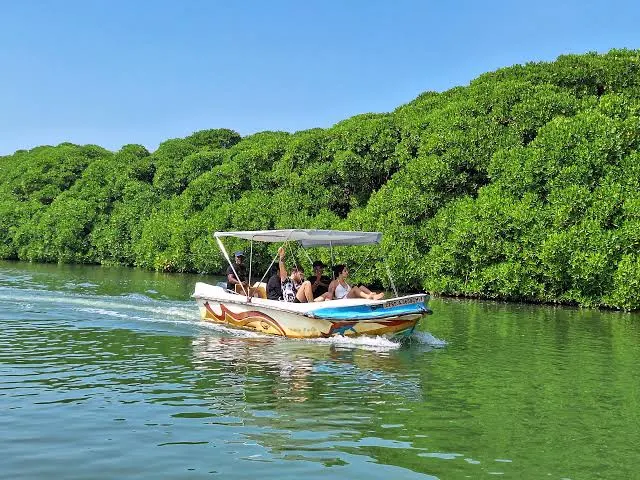
At the lagoon's southern end lies Muthurajawela, Sri Lanka's largest saltwater marsh and a rich wildlife sanctuary. A boat safari here glides through channels alive with herons, egrets, kingfishers, water monitors and even crocodiles β€” a surprising slice of wilderness minutes from the airport.

Little Rome's Churches

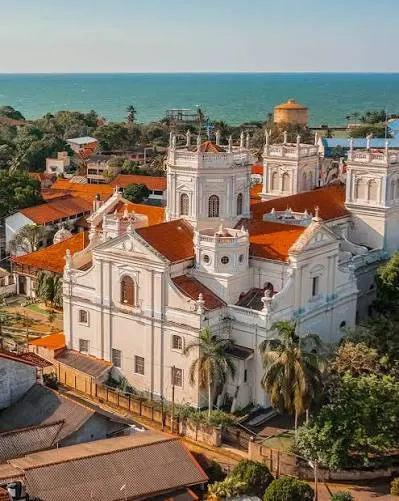
Negombo's Catholic heart shows in its grand churches. St. Mary's Church, one of the largest in Sri Lanka, dazzles with painted ceilings, while St. Sebastian's and countless smaller chapels lend the town its distinctive, spire-studded skyline.

Angurukaramulla Temple & the Dutch Fort

For a change of faith and pace, the Angurukaramulla Temple houses a striking reclining Buddha, vivid murals and a dramatic dragon-arch entrance. In the town centre, the lone surviving gate of the old Dutch Fort β€” now the prison entrance β€” makes a quick, atmospheric photo stop.

Ticket Prices & Opening Hours

Most of Negombo's pleasures are free; the main paid experiences are the boat safaris. All figures were checked this year; boat prices are set by operators and vary widely, so confirm before booking.

  • Beach, fish market, Dutch Fort gate & Dutch Canal towpath: free to visit. The fish market is liveliest 5–7 AM.
  • Churches: free to enter; a donation is welcome, and modest dress is expected.
  • Angurukaramulla Temple: free or by donation; remove shoes and hats and dress modestly.
  • Muthurajawela & Negombo Lagoon boat safaris: priced per operator for roughly a 2–4 hour private trip, usually including hotel pickup. Morning (around 7 AM) and sunset are the best times; confirm the rate and route first.
  • Outrigger, catamaran & deep-sea fishing trips: also priced per operator β€” agree the price before you set off.

Season & timing: the west-coast beach is at its best from November/December to April, when seas are calm and skies clear. The southwest monsoon (around May to August) brings rougher seas and less swimming, but the fish market, lagoon safaris, canals and churches are enjoyable year-round. For wildlife, take boat trips early in the morning.

Practical Tips

  • Use it as a soft landing. Negombo is the perfect first or last night β€” close to the airport and a gentle, authentic introduction to Sri Lanka.
  • Do the fish market at dawn. It's the town's must-see, and the early light and the auction are the whole point β€” go before 7 AM.
  • Take an early boat safari. Wildlife on the lagoon and in Muthurajawela is most active soon after sunrise.
  • Dress respectfully at churches and the temple. Cover shoulders and knees and remove shoes and hats where required.
  • Eat the lagoon crab. Negombo's seafood β€” crab, prawns, cuttlefish β€” is among the freshest on the island; seek out a lagoon-side restaurant.
  • Use PickMe or a pre-booked transfer. Ride-hailing apps and arranged airport pickups save haggling after a long flight.
  • Carry small cash. For the market, tuk-tuks, temple donations and street food.
  • Don't expect south-coast beaches. Come for the character, the seafood and the convenience rather than postcard sand.

How to Get There

Negombo's greatest practical asset is its location β€” it's the easiest coastal town in Sri Lanka to reach.

  • From the airport: Bandaranaike International Airport is just 10–12 km away, a 15–20 minute taxi or tuk-tuk ride β€” closer than Colombo itself.
  • From Colombo: around 35–40 km, roughly 30–60 minutes by car via the coastal road or expressway, or about 90 minutes by train.
  • Onward travel: Negombo is a handy springboard for the whole island β€” south to Colombo and Bentota, or inland to the Cultural Triangle sights of Dambulla and Sigiriya and the hills of Kandy.
  • Around town: tuk-tuks and ride-hailing apps like PickMe are cheap and easy.

Why Start or End Your Trip in Negombo

Negombo isn't trying to out-beach the south coast β€” its magic is being the right place at the right moment in your journey.

  • Unbeatable convenience: minutes from the airport, so there's no long, jet-lagged drive on arrival or a nervous dash on departure.
  • An authentic first taste: a working fishing town of markets, churches and canals feels more real than a polished resort strip.
  • A gentle springboard: rest here, then head to the beaches, the hills or the ancient cities refreshed.

Where Colombo throws you straight into the big city, Negombo offers a calmer, salt-scented welcome β€” which is exactly why so many travellers begin and end here.


Why Negombo Stays With You

Negombo stays with you as the bookends of a Sri Lankan journey β€” the first lungful of warm, fish-and-frangipani air after a long flight, and the last golden sunset over the lagoon before you leave. It's the town of church bells and outrigger canoes, of crab curry eaten with your fingers and boats sliding through mangrove shade.

You may arrive thinking of it as just the airport town, but you'll remember it as something warmer: the gentle threshold where Sri Lanka first said hello, and where, at the end, it waved you a reluctant goodbye.

Frequently Asked Questions

Is Negombo worth visiting?

Yes β€” especially as the first or last stop of a trip. Negombo won't rival the south coast's beaches, but its dawn fish market, lagoon and wetland boat safaris, Dutch-era canals, "Little Rome" churches and fresh seafood give it a genuine, working-town character many travellers love.

How far is Negombo from the airport?

Negombo is only about 10–12 km from Bandaranaike International Airport β€” a 15 to 20 minute taxi or tuk-tuk ride. That proximity makes it the most popular first-night and last-night base in Sri Lanka, avoiding a long, tiring transfer after a flight.

What is Negombo famous for?

Negombo is famous for its huge fishing industry and dawn fish market, its many Catholic churches (earning it the nickname "Little Rome"), its lagoon and Dutch-built canals, and its fresh seafood β€” especially lagoon crab and prawns. It's also known as Sri Lanka's convenient airport gateway town.

What is the best time to visit Negombo?

For the beach, the best months are November/December to April, when the west coast is dry and the sea is calm. The southwest monsoon around May to August brings rougher seas, but the fish market, boat safaris, canals and churches can be enjoyed all year.

How many days do you need in Negombo?

One or two nights is usually plenty β€” enough to see the fish market, take a lagoon or Muthurajawela boat safari, wander the churches and enjoy the seafood. Many travellers stay a single night on arrival or departure, sometimes longer to unwind before heading on.

Can you swim at Negombo beach?

Yes, in the dry season (roughly November to April) when the sea is calm, though the beach is more relaxed than pristine. During the southwest monsoon the sea can be rough and swimming is less advisable β€” enjoy the sunsets, seafood and boat trips instead.

What food should you try in Negombo?

Negombo is a seafood town, so try the famous lagoon crab (often as a spicy crab curry), fresh prawns, cuttlefish and the day's catch from the market, ideally at a lagoon-side restaurant. Wash it down with a king coconut and finish with local sweets.

Experiences & Activities

Discover unique experiences and memorable activities in Negombo.
Muthurajawela Wetland Boat Safari
Easy⏱️ 2–3 hours

Muthurajawela Wetland Boat Safari

Glide into Sri Lanka's largest saltwater marsh, a maze of channels and mangroves alive with herons, egrets, kingfishers, water monitors and crocodiles β€” all a stone's throw from the airport. A quiet boat and a good guide turn it into a genuine wildlife adventure. *Seasonal:* rewarding year-round; wildlife is most active on early-morning trips.
Cruise or Cycle the Dutch Canal
Easy⏱️ 1–2 hours

Cruise or Cycle the Dutch Canal

Follow the palm-shaded Hamilton (Dutch) Canal, cut centuries ago to carry cinnamon, either by slow boat or on a gentle bicycle ride along the towpath. It's a peaceful, atmospheric glimpse of Negombo's trading past, away from the traffic. Mornings and late afternoons are coolest for cycling.
Sunset on Negombo Beach
Easy⏱️ An evening

Sunset on Negombo Beach

As the day winds down, the wide western beach turns gold and the sky puts on a show over the Indian Ocean β€” the perfect first-evening or last-evening ritual. Settle at a beachfront restaurant with a cold drink and a plate of seafood. *Seasonal:* calmest and clearest for swimming and sunsets November–April.
Tour "Little Rome's" Churches
Easy⏱️ 1–2 hours

Tour "Little Rome's" Churches

Explore the Catholic soul of Negombo at St. Mary's Church, one of the largest in the country with beautifully painted ceilings, and St. Sebastian's nearby. Their spires and shrines reveal a side of Sri Lanka few expect. Dress modestly, covering shoulders and knees, and visit respectfully outside service times.
Nearby Destinations

Colombo

Colombo

Western Province

✦ 8 experiences

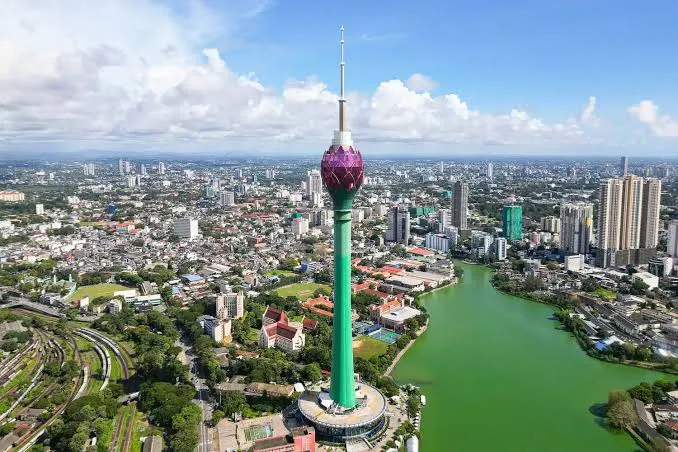
# Colombo: The Island's Gateway and Its Beating Heart Colombo is Sri Lanka's largest city and commercial capital, a bustling port metropolis on the west coast where most island journeys begin and end, about 35 km south of the international airport. It's a layered, energetic place β€” colonial arcades and candy-striped mosques, gleaming skyscrapers and the lotus-shaped tower, sea-breeze promenades and some of the finest food on the island. Not a beach or an ancient ruin but a living, reinventing city, Colombo rewards a day or two of wandering before or after the rest of your Sri Lankan adventure. ## History Colombo owes its existence to its harbour. For more than a thousand years, Arab and Moor traders sheltered here on the monsoon routes, drawn by cinnamon and the safe anchorage, long before Europeans arrived. The colonial centuries left deep marks. The Portuguese built a fort here in the early 1500s; the Dutch seized it in 1656 and laid out the canals and the district still called *Pettah* (from the Tamil for "outer town"); and the British, taking over in 1796, made Colombo the capital of Ceylon, building the grand port, the railways and the leafy mansions of *Cinnamon Gardens*. > Colombo has been the country's beating commercial heart for centuries β€” though since 1982 the official administrative capital has technically been neighbouring Sri Jayawardenepura Kotte, a distinction few visitors ever notice. Since the civil war's end in 2009, Colombo has transformed at speed β€” a new skyline of towers, the vast reclaimed-land Port City project, and a confident food and arts scene. It remains a city of layers, where a colonial arcade, a Buddhist temple, a Hindu kovil, a mosque and a glass tower can all share a single skyline. ## What to See ### Galle Face Green Colombo's great seafront lawn is the city's living room β€” a half-mile promenade where, as the sun sets, families fly kites, couples stroll, and vendors grill *isso wade* (prawn fritters) and serve king coconuts. Come at dusk for the breeze, the colour and the crowd; it's the most Colombo of experiences. ### Gangaramaya Temple & Seema Malaka The city's most important and eclectic Buddhist temple, *Gangaramaya* is a treasure-house of Buddha images, gifts and curiosities, part temple and part museum. Its serene sister site, the *Seema Malaka* β€” a cluster of pavilions floating on Beira Lake, designed by the great architect Geoffrey Bawa β€” is one of the loveliest quiet corners in the city. ### Colombo National Museum Housed in a gracious colonial building, the island's largest museum tells Sri Lanka's whole story, from ancient statuary and Kandyan royal regalia to swords, masks and manuscripts. It's the single best place to make sense of everything you'll see elsewhere on the island β€” allow a couple of hours. ### Colombo Lotus Tower Rising 356 metres over the city in the shape of a lotus, this is Sri Lanka's tallest structure and its boldest modern landmark. The observation deck offers a sweeping 360-degree panorama of the city, the harbour and the Indian Ocean. > Time your visit for late afternoon to catch both the daytime view and the sunset, then watch the city lights blink on. Weekday mornings are quietest. ### Pettah & the Red Mosque The frenetic *Pettah* bazaar is Colombo at full volume β€” a grid of streets each devoted to its own trade, from textiles to electronics to spices. At its heart stands the *Jami Ul-Alfar Mosque*, an unforgettable candy-striped confection of red-and-white brick that's one of the city's most photographed buildings. ### Independence Square & Cinnamon Gardens In the elegant *Cinnamon Gardens* district, the columned Independence Memorial Hall commemorates the end of colonial rule, surrounded by joggers at dawn and dusk. Nearby, the restored *Arcade Independence Square* offers boutique shopping in a beautiful old colonial building. ### The Fort & the New Waterfront The historic *Fort* district blends colonial grandeur β€” the restored Old Dutch Hospital, now a dining and shopping precinct β€” with the gleaming ambition of Port City Colombo, a vast reclaimed-land development with a brand-new city beach. ## Ticket Prices & Opening Hours Many of Colombo's pleasures are free; a handful of sights are ticketed. All figures were checked this year; **prices and hours change, so confirm before visiting.** - *Colombo Lotus Tower:* observation deck **around US$20 per adult and US$10 per child**. Open roughly weekdays 9 AM–9 PM and weekends until about 10 PM (ticket counter closes about an hour earlier). - *Colombo National Museum:* foreigner entry **around US$5 per adult and US$2.50 per child**. Open daily about 9 AM–5 PM (last entry around 4:30); closed on some public holidays. - *Gangaramaya Temple:* entry commonly **around LKR 300**, including the temple, museum, library and Seema Malaka β€” though some sources list a higher foreigner rate, so confirm at the counter. Open daily about 6 AM–8 PM. Dress modestly. - *Free to visit:* Galle Face Green, Independence Square, Pettah market and the Red Mosque (a donation is welcome), Viharamahadevi Park, the Old Dutch Hospital, and the Port City waterfront and beach. **Season & timing:** Colombo is warm and humid year-round, with the driest, most pleasant weather roughly **December to March**. The southwest monsoon (around May to September) brings afternoon downpours, but the city carries on regardless β€” just carry an umbrella. Early mornings and late afternoons are the coolest, kindest times to explore on foot. ## Practical Tips - *Give it a day or two, not a rushed hour.* Colombo isn't a single sight but a city to graze β€” temples, markets, food and sea air. - *Use ride-hailing apps.* PickMe and Uber (including tuk-tuks) are cheap, easy and save haggling; agree metered or app fares over street quotes. - *Beat the heat.* Sightsee in the morning and late afternoon, and duck into a cafΓ© or mall during the midday heat. - *Dress respectfully for temples and mosques.* Cover shoulders and knees, and remove shoes and hats before entering; the Red Mosque and Gangaramaya both expect modest dress. - *Eat everywhere.* Colombo is the island's food capital β€” try kottu, hoppers, short eats and a proper rice and curry, from street stalls to smart rooftops. - *Head to Galle Face at sunset.* It's free, lively and quintessentially Colombo β€” bring an appetite for street snacks. - *Carry small cash.* For markets, tuk-tuks, temple entry and street food, though cards work in malls and hotels. - *Mind the traffic.* Colombo's congestion is real; plan cross-city trips around the worst of the rush hours. ## How to Get There As the country's main hub, Colombo is the easiest place in Sri Lanka to reach and to leave from. - *From the airport:* Bandaranaike International Airport (CMB) sits about 35 km north near [Negombo](/negombo-travel-guide); the airport expressway brings you into the city in around 30–60 minutes by taxi. - *By train:* Colombo Fort is the heart of the rail network, with scenic lines south along the coast to [Galle](/galle-travel-guide) and up into the hills toward [Kandy](/kandy-travel-guide) and the tea country. - *By expressway:* the Southern Expressway speeds you to the south coast and [Bentota](/bentota-travel-guide), while highways head inland toward the Cultural Triangle sights of [Dambulla](/dambulla-travel-guide) and [Sigiriya](/sigiriya-travel-guide). - *Around the city:* tuk-tuks and ride-hailing apps are the simplest way to get around. ## Why Colombo Is Worth Your Time Some travellers treat Colombo as just an airport transfer β€” and miss the point. The city isn't competing with the beaches or the ruins; it offers something they can't. - *Layered history:* Portuguese, Dutch and British legacies stacked beside temples, kovils and mosques. - *The island's best food scene:* from street kottu to rooftop fine dining, this is where Sri Lanka eats. - *A real, living city:* markets, galleries, shopping and sea-breeze promenades, unpolished and genuine. - *The perfect bookend:* an easy, rewarding start or finish to any Sri Lankan itinerary. Give Colombo a day at the beginning or end of your trip and it repays you with context, colour and the island's best meals. --- ## Why Colombo Stays With You Colombo stays with you as a city of the senses β€” the sizzle of a kottu griddle, the salt breeze off Galle Face at dusk, the red-and-white dazzle of a mosque above a chaotic bazaar, the hush of pavilions floating on a city lake. It doesn't hand you its charms on a postcard; it makes you find them, street by street. You leave with the feeling of having glimpsed the real, unvarnished pulse of Sri Lanka β€” a place that is old and new at once, trading and praying and building and eating, all in the same salt-scented afternoon. That living, layered energy is Colombo's quiet gift. ## Frequently Asked Questions ### Is Colombo worth visiting? Yes, if you give it a chance. Colombo isn't a beach or a ruin but a vibrant, layered city with colonial architecture, temples, markets, a striking modern skyline and the island's best food scene. A day or two at the start or end of a Sri Lanka trip adds real context and colour. ### What are the best things to do in Colombo? Highlights include watching sunset at Galle Face Green, visiting Gangaramaya Temple and its lake pavilion Seema Malaka, exploring the Pettah bazaar and Red Mosque, taking in the view from the Lotus Tower, and browsing the National Museum β€” all wrapped around plenty of excellent eating. ### How many days do you need in Colombo? One to two days is usually enough to see the main sights, eat well and get a feel for the city. Many travellers spend a day here at the start or end of their trip, often combining it with the airport town of Negombo. ### How do you get from Colombo airport to the city? Bandaranaike International Airport is about 35 km north of Colombo. The quickest way is a taxi via the airport expressway, taking around 30–60 minutes depending on traffic. Ride-hailing apps and airport taxis are readily available, and many hotels arrange transfers. ### How much does the Colombo Lotus Tower cost? Entry to the observation deck is around US$20 for adults and US$10 for children. It's open roughly 9 AM to 9 or 10 PM, with the ticket counter closing about an hour earlier. Late afternoon is the best time to catch both the view and the sunset. ### Is Colombo safe for tourists? Colombo is generally considered a safe city for visitors, with the usual big-city precautions: watch your belongings in crowded markets, use reputable taxis or ride-hailing apps, and agree fares in advance. As anywhere, stay aware of your surroundings, especially at night. ### What food should you try in Colombo? Colombo is Sri Lanka's food capital, so try kottu roti, egg and milk hoppers, string hoppers, "short eats," fresh seafood and a full rice and curry. Sample street food at Galle Face, then work up to the city's excellent cafΓ©s and rooftop restaurants.