Unawatuna
Down South · Southern Province
Unawatuna: A Sheltered Bay Where the South Coast Slows Down
Unawatuna is a golden crescent bay on Sri Lanka's south coast, about 6 km from the walled city of Galle and roughly 120 km from Colombo, long loved as one of the island's safest and calmest swimming beaches thanks to a protecting offshore reef. Where much of the south coast is built for surfers, Unawatuna is built for floating — warm, shallow, turquoise water, sea turtles grazing in the shallows, and a shoreline of palm shade and easygoing cafés. The beach itself is free, the Japanese Peace Pagoda on the headland is free, and the whole town runs at the pace of an afternoon that never quite ends.
History
For most of its life Unawatuna was a quiet fishing village in the lee of Rumassala Hill, the forested headland that shelters its bay. Local legend ties that hill to the Ramayana: it is said to be a fragment of a Himalayan mountain dropped by the monkey god Hanuman as he carried healing herbs to a wounded prince — which is why, the story goes, rare medicinal plants still grow on its slopes.
The bay's calm water and easy access from Galle made it one of the first south-coast beaches to draw travellers, and by the 1990s it had become a firm fixture on the backpacker trail. The 2004 tsunami struck hard here, reshaping the shoreline and the town that depended on it; the community rebuilt, and Unawatuna returned as a more developed but still relaxed beach town.
In 2005, Japanese monks of the Mahayana tradition completed the gleaming white Peace Pagoda on Rumassala's headland — one of many built worldwide to promote peace, and now Unawatuna's most striking landmark.
Today Unawatuna balances its two identities: a working coast of fishermen and reef, and a friendly, well-worn traveller's town of guesthouses, dive shops and beach bars.
What to See
Unawatuna Beach
The heart of it all — a sheltered, palm-fringed bay with soft sand and water so calm it feels like a lagoon. The offshore reef breaks the swell, making this one of the few south-coast beaches where families, children and nervous swimmers can relax in the sea. Cafés and seafood grills line the sand, and sunset here is a nightly event.
Japanese Peace Pagoda
A brilliant white stupa perched on the Rumassala headland, reached by a short uphill walk or tuk-tuk ride. The climb rewards you with sweeping views back over the bay and out to the Indian Ocean, and the grounds are calm and contemplative. Sunset is the time to come, when the pagoda glows gold and the coast softens into evening.
Jungle Beach
A small, secluded cove tucked into the forested flank of Rumassala, reached on foot by a rough trail over the headland (or a short tuk-tuk ride to the top and a walk down). The water is clear and good for snorkelling, and the setting — sand cupped by green jungle — is lovely, though it can get busy and littered at peak times. Come early for the best of it.
Dalawella Rope Swing
Just east of the main bay, a rope swing hangs from a leaning coconut palm straight out over the sea — one of the most photographed spots on the coast. It's touristy and there's usually a small fee, but the swing genuinely is fun, and the tide-pool beside it makes a natural swimming pool at high tide.
Sea Turtles & the Turtle Hatchery
Green turtles and hawksbills feed in Unawatuna's shallows, and snorkellers regularly meet them in the bay — please look, don't touch. A short tuk-tuk ride east, the Sea Turtle Hatchery at Habaraduwa rescues, rehabilitates and releases injured turtles and protects eggs from poaching; a guide walks you through the tanks and the conservation work.
Diving, Snorkelling & Rumassala
Rocky reefs, black coral, tropical fish and even shipwrecks like the SS Rangoon make Unawatuna a fine base for diving and snorkelling, with beginner-friendly sites close to shore. Inland, a walk up Rumassala Hill leads through the fabled medicinal-herb forest with viewpoints over the whole bay.
Ticket Prices & Opening Hours
Unawatuna is a beach town, not a ticketed monument — the beach and its headland cost nothing. All figures below were checked this year; prices at small operators change often and should be confirmed on arrival.
- Unawatuna Beach, Japanese Peace Pagoda, Jungle Beach, Rumassala Hill: free to visit. You may pay a small amount for tuk-tuks or informal parking.
- Dalawella rope swing: a small fee, usually a few hundred rupees, to use it or take photos.
- Sea Turtle Hatchery, Habaraduwa: around 2,000 LKR per adult, generally free for children; releasing a hatchling costs an extra donation of around 2,000 LKR. The Koggala hatchery is a little cheaper (~1,500 LKR); the Mahamodara hatchery near Galle is donation-based.
- Diving & snorkelling trips: priced per operator and per course — get a current quote from a reputable local dive centre.
Hours & season: the beach is open and free at all hours; sunrise and late afternoon are gentlest for swimming. The Peace Pagoda and hatchery keep rough daytime hours (roughly morning to early evening). The best conditions and clearest water run December to April, peaking December–February. Unawatuna's sheltered bay stays swimmable more of the year than most south-coast beaches, but May–October brings rougher seas and reduced visibility.
Practical Tips
- This is a swimming beach, not a surf beach. If you want gentle water, that's the point; if you want waves, nearby Weligama suits beginners better.
- Snorkel early. Morning light and calm water give the best visibility and the best chance of meeting turtles before the crowds.
- Never touch or chase turtles or coral. Keep your distance and use reef-safe sunscreen.
- Walk to Jungle Beach in proper shoes. The headland trail is rocky and uneven — flip-flops and small children will struggle.
- Check the tide for the Dalawella swing. High tide fills the natural rock pool and makes the whole spot far nicer.
- Carry small cash in rupees. For tuk-tuks, the hatchery, the swing fee and beach cafés.
- Pair it with Galle. The fort is only about 15 minutes away and makes a perfect late-afternoon outing.
- Book ahead in peak season. December to February fills the best guesthouses quickly.
How to Get There
Unawatuna sits just south-east of Galle, roughly 120 km from Colombo.
- By car or private transfer: the quickest option. Via the Southern Expressway (E01) to Galle, then a short hop east, Colombo to Unawatuna takes around 2.5 to 3 hours.
- By train: the coastal railway is scenic and cheap. Unawatuna has a small halt, but the main hub is Galle, from where it's a 10–15 minute tuk-tuk ride.
- By bus: frequent Galle–Matara coast-road buses stop near Unawatuna; slow but very cheap.
- By tuk-tuk: the easiest way to reach the Peace Pagoda, Jungle Beach, the swing and the turtle hatchery once you've arrived.
Many travellers string Unawatuna together with Galle and the whale-watching town of Mirissa further east for a classic south-coast run.
Why Unawatuna Is Special
On a coast famous for its surf, Unawatuna's quiet superpower is calm. Its reef-sheltered bay is one of the safest places to swim on the whole south coast, which changes who the town is for.
- Unawatuna: calm, shallow, reef-protected water — ideal for families, snorkellers, floaters and anyone who just wants to be in the sea.
- Mirissa: a livelier scene built around whale-watching and sunset bars.
- Weligama: long beginner surf breaks and board-hire culture.
If your idea of a beach day is bobbing over a reef with a turtle rather than paddling for a wave, Unawatuna is your bay.
Why Unawatuna Stays With You
Unawatuna stays with you as a feeling more than a sight: the particular stillness of water with no waves to fight, the shade of a leaning palm at midday, the slow gold of a Peace Pagoda sunset, the small miracle of a turtle drifting past your mask in the shallows. It asks nothing of you but to slow down.
It is not the wildest or most dramatic beach in Sri Lanka — but it may be the kindest, the one that lets you exhale. Long after the trip, it's the bay you'll picture when you think of doing nothing, beautifully.
Frequently Asked Questions
Is Unawatuna beach good for swimming?
Yes — it's one of the safest swimming beaches in Sri Lanka. An offshore reef shelters the bay, keeping the water calm and shallow, which makes it well suited to families, children and less confident swimmers. Always still respect currents, especially outside the protected bay.
Is Unawatuna better than Mirissa?
They're different. Unawatuna is calmer and best for swimming, snorkelling and relaxing; Mirissa is livelier and built around whale-watching. If you want gentle water and turtles, choose Unawatuna; if you want to see blue whales in season, choose Mirissa — and ideally visit both.
How much does the Unawatuna turtle hatchery cost?
The Sea Turtle Hatchery at Habaraduwa, a short tuk-tuk ride from Unawatuna, costs around 2,000 LKR per adult and is generally free for children. Releasing a baby turtle usually costs an extra donation of around 2,000 LKR. Confirm current prices on arrival.
Can you see turtles in Unawatuna?
Yes. Green and hawksbill turtles feed in the bay's shallows and are regularly seen by snorkellers, especially in the morning. Keep a respectful distance and never touch or chase them. The nearby turtle hatchery is a good way to learn about conservation too.
How do I get from Galle to Unawatuna?
Unawatuna is only about 6 km from Galle — roughly a 10–15 minute tuk-tuk ride. You can also take a short coast-road bus or a quick taxi. From Colombo, the whole trip via the Southern Expressway takes about 2.5–3 hours.
When is the best time to visit Unawatuna?
The best conditions run December to April, with the calmest seas and clearest water for snorkelling, peaking December to February. Thanks to its sheltered reef, Unawatuna stays swimmable longer than most south-coast beaches, though May to October brings rougher seas.
Is Jungle Beach worth visiting?
It's a pretty, forest-backed cove with clear water good for snorkelling, and worth the short trek over the headland — but it's small and can get crowded and littered at busy times. Go early in the morning for the calmest, cleanest experience.
Experiences & Activities
Discover unique experiences and memorable activities in Unawatuna.
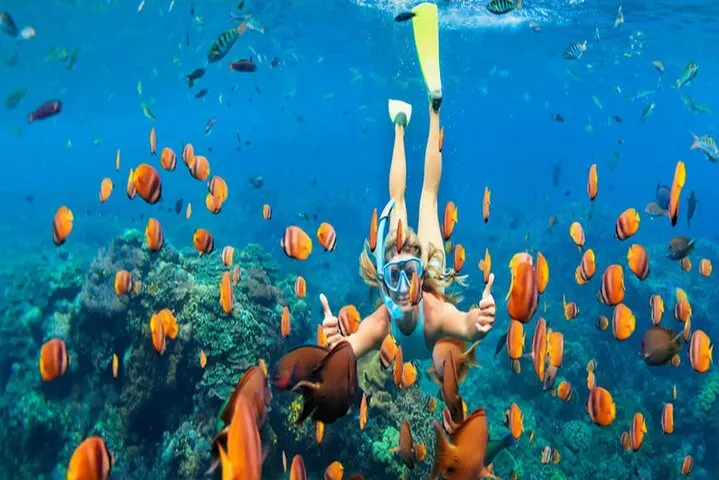
Snorkel the Reef Bay
Slip into Unawatuna's sheltered bay and float over patches of coral alive with tropical fish — and, often, green turtles grazing in the shallows. The reef keeps the water calm enough for beginners, making this some of the most accessible snorkelling on the south coast. *Seasonal:* clearest visibility runs roughly December–April; go early morning for the calmest water and the best turtle encounters.
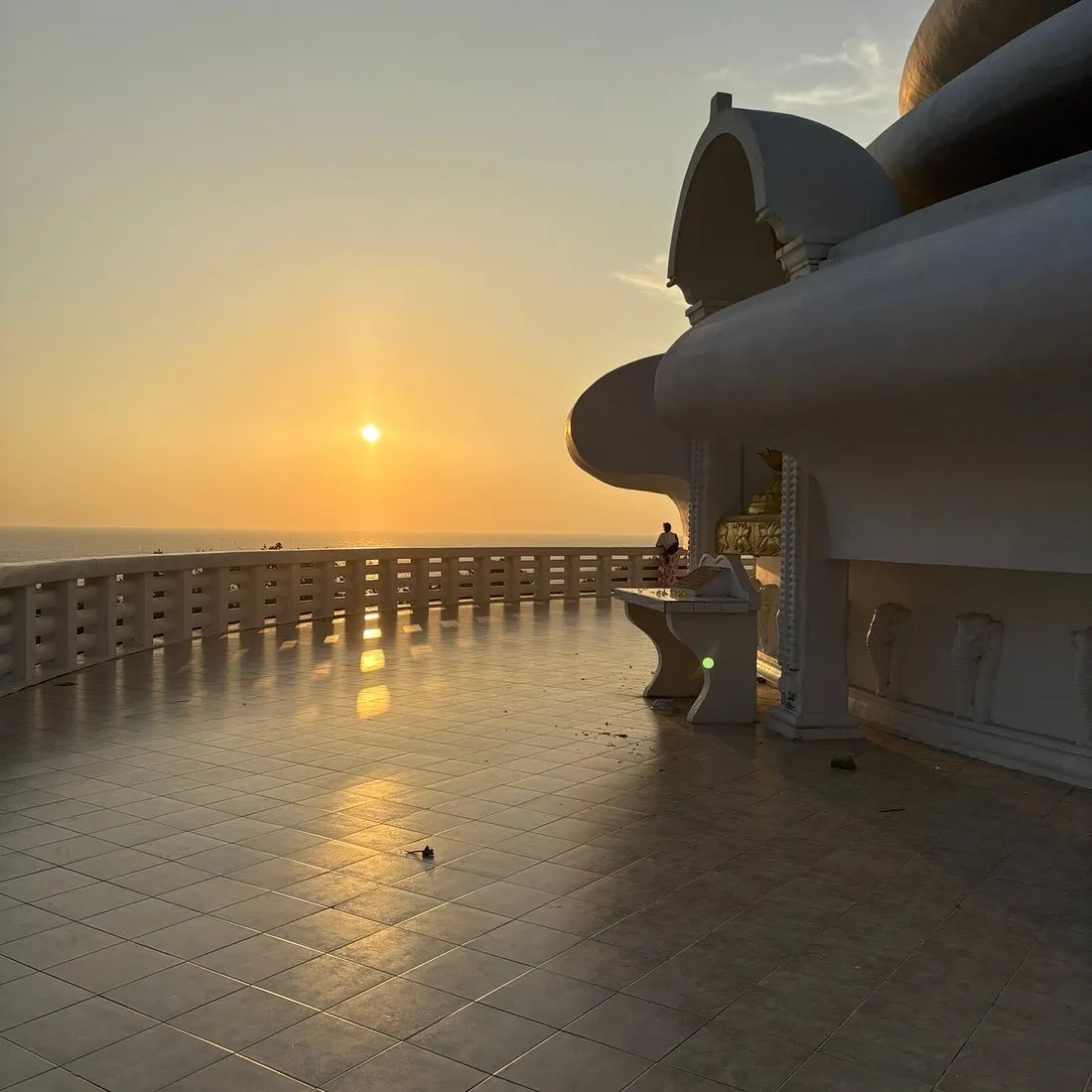
Sunset at the Japanese Peace Pagoda
Walk or tuk-tuk up the Rumassala headland to the gleaming white stupa built by Japanese monks in 2005. The grounds are serene and the panorama over the bay is superb, especially as the light turns gold. Arrive an hour before sunset to enjoy the calm before the crowds and catch the coast at its most beautiful.

Trek to Jungle Beach
Follow the rough forest trail over Rumassala Hill to a hidden cove backed by jungle, with clear water good for a snorkel and a swim. Wear proper shoes — the path is rocky and uneven. Go early to beat the heat and the crowds, and carry out whatever you carry in, as the little beach struggles with litter at busy times.
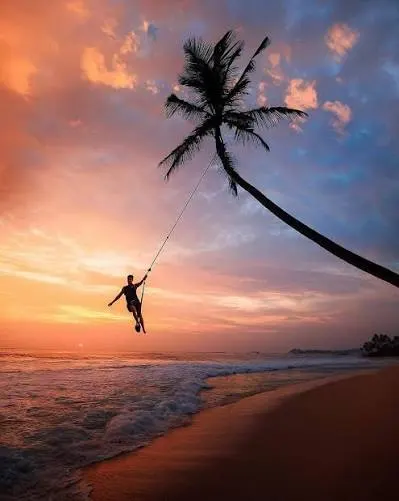
The Dalawella Palm Rope Swing
A short ride east brings you to the famous rope swing arcing out over the sea from a leaning coconut palm — the south coast's most Instagrammed moment. There's usually a small fee, but the swing is genuinely good fun and the natural rock pool beside it makes a lovely dip. Time your visit for high tide, when the pool fills.
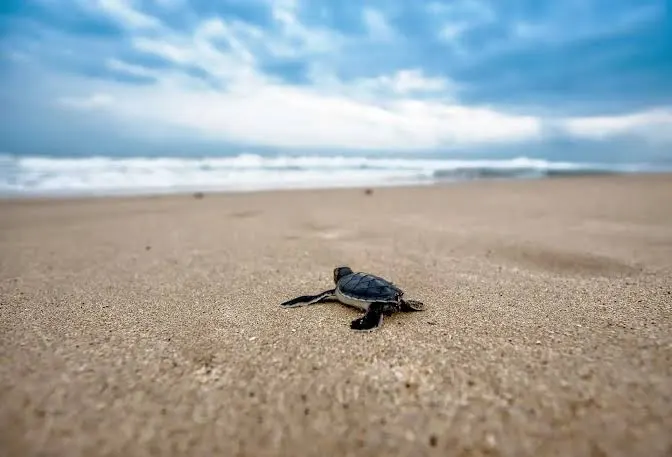
Release a Hatchling at the Turtle Hatchery
A short tuk-tuk ride east to Habaraduwa brings you to a conservation hatchery that rescues injured turtles and protects eggs from poachers. A guide explains the work and the species in their care, and when hatchlings are ready you may be able to help release one to the sea. A small, worthwhile way to support marine conservation.

Surf Session at Dalawella
Just beyond Unawatuna's calm bay, the beaches around Dalawella and Weligama pick up gentle, forgiving waves ideal for a first lesson. Board hire and instruction are cheap and friendly along this stretch of coast. *Seasonal:* south-coast surf is best November–April, when the swell and conditions line up.
Nearby Destinations
Mirissa
Southern Province
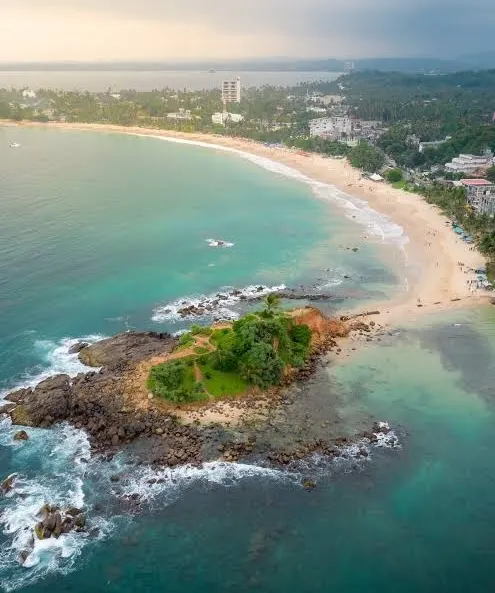
# Mirissa: Where the Ocean's Giants Come to Meet You Mirissa is a crescent-shaped beach town on Sri Lanka's south coast, about 150 km from Colombo, and it is the island's undisputed capital of whale watching — one of the few places on Earth where blue whales, the largest animals that have ever lived, cruise within a couple of hours of the harbour. Beyond the boats, Mirissa is a slow, golden place of leaning coconut palms, tide-pooled rocks you can climb at sunrise, and seafood grills that fire up as the sun drops into the Indian Ocean. The whale-watching season runs roughly November to April, but the beach itself never closes, and it is free. ## History Mirissa began, as so many south-coast villages did, as a fishing settlement — a natural harbour tucked behind a headland where outrigger canoes could shelter from the swell. For generations the town's rhythm was set by the sea: nets hauled at dawn, catch sold by mid-morning, boats mended in the heat of the afternoon. Its transformation came late and fast. When commercial whale-watching arrived on the south coast in the years after the 2004 tsunami, researchers confirmed what local fishermen had long known — that the deep water off Dondra Head, the island's southernmost point just east of town, was a highway for blue and sperm whales. The continental shelf drops away sharply here, and nutrient-rich currents rise from the depths to feed the krill that feed the giants. > Mirissa sits beside one of the deepest submarine canyons in the Indian Ocean. That single geological accident is why the world's largest animal can be reached in under two hours from a small fishing harbour. Within a decade Mirissa went from sleepy backwater to bucket-list name. The fishing boats are still here — many double as whale boats in season — but they now share the bay with surfers, honeymooners, and a steady tide of travellers who came for the whales and stayed for the sunsets. ## What to See ### Whale & Dolphin Watching This is the reason most people come, and it earns its reputation. In season, boats leave the harbour before dawn and head for the deep water off Dondra, where *blue whales*, *sperm whales*, Bryde's whales, and vast pods of spinner dolphins gather. Sightings are never guaranteed — these are wild animals in open ocean — but the odds are among the best anywhere on the planet, and the moment a blue whale's blow rises against the morning light is one you do not forget. > One responsible operator reports whale sighting rates of around 50% and dolphin sightings around 90% across the season. Choose your boat for its conduct, not its price — the cheapest, most crowded boats are often the ones that chase and crowd the animals. ### Mirissa Beach A wide, palm-fringed arc of soft sand, Mirissa Beach is the town's living room. Mornings are calm and swimmable; evenings belong to the beach bars, whose plastic tables and fairy lights spill onto the sand as fishermen grill the day's catch a few metres from the waterline. It is unpretentious, a little worn in places, and completely lovable. ### Coconut Tree Hill A red-clay promontory crowned with dozens of tall, leaning coconut palms, this is the most photographed spot in Mirissa — and one of the most photographed on the whole south coast. It is a ten-minute walk from the main beach. Come at *sunrise* for soft light and near-empty paths, or at sunset for golden colour and a crowd. Mind the steep, slippery edge at the top. ### Parrot Rock A small rocky islet just off the beach with a wooden staircase to its summit. At low tide you can wade across easily; at high tide the crossing reaches waist-deep, so time it right. From the top you get the classic panorama — Coconut Tree Hill on one side, the sweep of Mirissa Beach in the middle, and open ocean beyond. ### Secret Beach Not so secret anymore, but still quieter than the main strand because it takes a little effort to reach. A cluster of small coves reached by a short walk over the headland, with a bar or two and calmer water for swimming. A lovely spot for a late-afternoon dip away from the crowds. ## Ticket Prices & Opening Hours Mirissa has no single entrance gate — the beach, Parrot Rock and Coconut Tree Hill are essentially free to visit. The main paid experience is whale watching. All figures below were checked this year; **prices vary between operators and should be confirmed at booking.** - *Whale-watching, shared double-deck boat:* around **$50–60 USD (roughly 16,000 LKR)** per adult, typically including breakfast on board. One ethical operator quotes 16,000 LKR per adult including government tax. - *Additional harbour / check-in fee:* some operators add around **$20 USD** at check-in; others fold it into the ticket — ask before you pay. - *Private or speedboat charters:* considerably more, priced per boat rather than per head. - *Coconut Tree Hill:* entry is generally **free**, though you may be asked for a small informal fee of around 200–500 LKR, plus roughly 100 LKR for parking. - *Parrot Rock & Secret Beach:* free (Secret Beach occasionally levies a small fee). **Whale-watching hours & season:** check-in is usually around **6:00 AM**, with boats leaving the harbour about **6:30 AM**; tours last roughly **3–5 hours**. The season runs **November to April**, with the calmest seas and most reliable sightings from **December to March** — January to March is the sweet spot. Between May and October the seas turn rough and most operators suspend tours. ## Practical Tips - *Book the boat, not just the trip.* Pick a licensed operator known for keeping distance from the whales and capping passenger numbers. Overcrowded boats are cheaper for a reason. - *Take seasickness seriously.* The open ocean can be choppy even in season. Take a tablet the night before and again in the morning if you're prone to it. - *Go early in the season window if you can.* December to March offers the calmest water and the best light. - *Bring sun protection and a light layer.* Dawn on the water is cool; by 9 AM the sun is fierce. Reef-safe sunscreen, a hat, and sunglasses are essentials. - *Carry small cash in rupees.* For tuk-tuks, parking, beach cafés and any informal fees at the viewpoints. - *Visit Coconut Tree Hill and Parrot Rock at sunrise.* Fewer people, softer light, and cooler walking. - *Check the tide before Parrot Rock.* Low tide makes the crossing simple; high tide means wading. - *Respect the fishing community.* The boats and the harbour are working livelihoods, not just a backdrop. ## How to Get There Mirissa sits on the south coast between [Weligama](/weligama-travel-guide) and [Tangalle](/tangalle-travel-guide), roughly 150 km from Colombo. - *By car or private transfer:* the fastest option. Via the Southern Expressway (E01), Colombo to Mirissa takes around **2.5 to 3.5 hours**. This is the easiest way if you're carrying luggage or arriving from the airport. - *By train:* the scenic coastal railway is a joy. There's no station in Mirissa itself — the nearest is **Weligama** (about 7–8 km away), a short tuk-tuk ride from town. The larger hub of Matara is a little further east. - *By bus:* frequent buses run along the Galle–Matara coast road and stop near Mirissa; cheap, local, and slow. - *By tuk-tuk:* ideal for getting around town and to the viewpoints once you've arrived. Many travellers pair Mirissa with the walled city of [Galle](/galle-travel-guide) to the west or the calmer sands of [Unawatuna](/unawatuna-travel-guide), stringing together a south-coast run. ## Mirissa vs. Trincomalee: Choosing Your Whale Coast Sri Lanka is unusual in offering *two* world-class whale seasons on opposite coasts, so timing decides where you go. - *Mirissa (south coast):* season November–April, peaking December–March. Famous for **blue whales** and sperm whales, reached from a lively, well-developed beach town with plenty to do on land. - *Trincomalee (east coast):* season roughly May–September. Whales swim even closer to shore — often just 6–8 nautical miles out — and the crowds are thinner. If you're visiting Sri Lanka's south or hill country in the northern-hemisphere winter, Mirissa is the natural choice. Travelling in the middle of the year? Trincomalee is where the whales will be. Between them, the island offers one of the longest whale-watching seasons on Earth. --- ## Why Mirissa Stays With You Mirissa lingers because it holds two scales at once. There is the intimate scale — the warm sand under your feet at dusk, a plate of grilled fish, the fairy lights of a beach bar, the leaning palms catching the last of the sun on Coconut Tree Hill. And there is the immense scale — a creature the length of three buses rising silently from the deep, its heart the size of a small car, spending a breath in your company before slipping back into the blue. Few places let you swing between the very small and the very vast in a single morning. You leave Mirissa having been reminded, gently and unforgettably, of just how big and alive the ocean really is. ## Frequently Asked Questions ### Is whale watching in Mirissa worth it? For most travellers, yes. Mirissa is one of the best places in the world to see blue whales, and sightings — while never guaranteed — are frequent in season. Choosing a responsible, less crowded operator makes a good trip a great one. ### What is the best month for whale watching in Mirissa? The season runs November to April, but January to March offers the calmest seas and the most reliable sightings. December and April are still good, with slightly more variable weather at the edges. ### How much does a whale watching tour in Mirissa cost? A shared double-deck tour costs around $50–60 USD (roughly 16,000 LKR) per adult, usually including breakfast. Some operators add a harbour fee of around $20, and private charters cost more. Confirm the exact price and what's included when you book. ### Are you guaranteed to see whales in Mirissa? No. These are wild animals in the open ocean, so sightings can't be promised. That said, in-season success rates are high — one operator reports roughly 50% for whales and around 90% for dolphins. Some operators offer a discount or a repeat trip if nothing is seen. ### Is Mirissa or Trincomalee better for whale watching? It depends on when you visit. Mirissa (south coast) is best November–April; Trincomalee (east coast) is best May–September. For a winter trip to southern Sri Lanka, Mirissa wins; for a mid-year trip, choose Trincomalee. ### How do I get from Colombo to Mirissa? The quickest route is the Southern Expressway by car, taking about 2.5–3.5 hours. You can also take the scenic coastal train to Weligama (about 7–8 km away) and finish by tuk-tuk, or catch a coast-road bus. ### Is Mirissa good for non-swimmers and families? Yes. The main beach has calm morning water, and whale-watching boats carry life jackets for everyone. Families should still take seasickness precautions and choose a larger, stable boat for the ocean leg.
Bentota
Southern Province
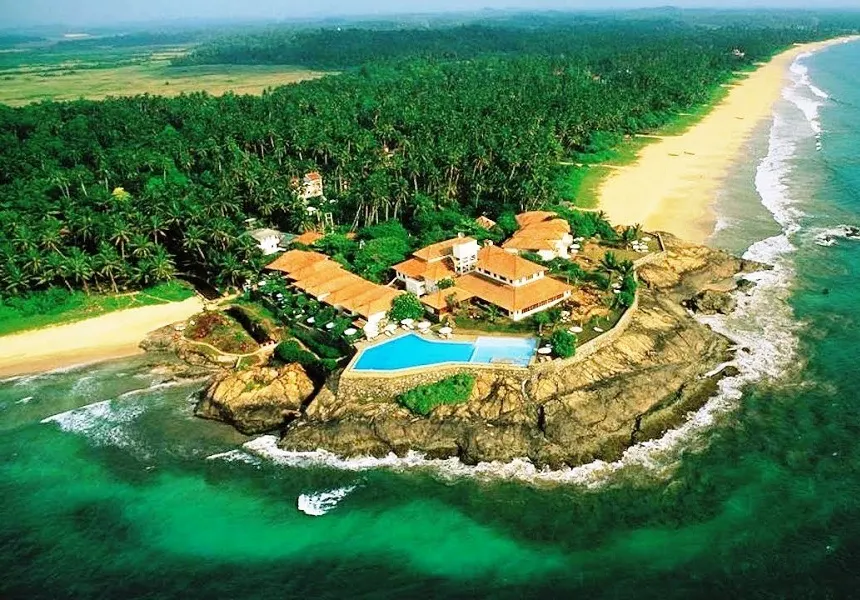
# Bentota: Where the River Meets the Sea and the Fun Begins Bentota is a resort town on Sri Lanka's southwest coast, about 65 km south of Colombo, set at the golden point where the Bentota River spills into the Indian Ocean — a meeting of water that has made it the island's undisputed watersports capital. Beyond the jet skis and long sandy beach, Bentota holds two of Sri Lanka's most celebrated tropical gardens, both created by the legendary Bawa brothers, plus mangrove river safaris and a famous turtle coast just to the south. It is Sri Lanka at its most easygoing and versatile, and the best conditions run roughly November to April. ## History Bentota grew up where the river did its work — a sheltered estuary that gave fishermen calm water and traders a natural harbour on the busy southwest coast. For centuries it was a modest coastal village, its life shaped by the tides, the monsoon, and the spice and cinnamon trade that moved along this shore under successive Portuguese, Dutch and British rule. Its modern story is really the story of two brothers. In the mid-20th century, architect *Geoffrey Bawa* — the father of "tropical modernism" and Sri Lanka's most influential designer — bought a rubber and cinnamon estate on the banks of nearby Dedduwa Lake and spent decades turning it into Lunuganga, his private garden masterpiece. His elder brother, *Bevis Bawa*, had already begun Brief Garden a little inland, an artist's paradise that hosted the likes of Laurence Olivier and Vivien Leigh. > Bentota's two great gardens are a family act: Bevis Bawa's Brief Garden inspired his younger brother Geoffrey to create Lunuganga — the estate that in turn shaped Sri Lankan architecture for generations. In the 1960s and 70s, Bentota was chosen as the site of a national tourism development zone, and its beaches filled with resorts. Today it blends that resort ease with river adventure and the quiet genius of the Bawas. ## What to See ### Bentota Beach A long, wide sweep of golden sand backed by resorts and casuarina trees, Bentota Beach is made for slow days — swimming, sunbathing and long walks toward the river mouth. The section near the estuary is especially scenic, where a slender spit of sand separates the calm river from the open ocean. ### The Bentota River & Water Sports This is Bentota's beating heart. Where the *Bentota Ganga* meets the sea, a sheltered lagoon has become the country's premier watersports playground — jet skis, banana boats, tube rides, water-skiing, windsurfing and wakeboarding all run from here. The calm river water makes it beginner-friendly and far safer than the open surf. ### Lunuganga — Geoffrey Bawa's Estate The country estate where Geoffrey Bawa spent fifty years experimenting is now a serene, dreamlike garden open by guided tour. Terraces, water steps, sculptures and framed vistas blend Italian, English, Japanese and ancient Sri Lankan ideas into one flowing landscape. For anyone interested in design, it is essential — a walk through the mind of a master. ### Brief Garden — Bevis Bawa About ten kilometres inland at Kalawila, Bevis Bawa's *Brief Garden* is the wilder, more romantic of the two — a hidden green world of bamboo, moss, ponds and eccentric sculpture surrounding the artist's characterful house. Begun in 1929 and tended over nearly forty years, it feels like stepping into a secret from a storybook. ### Madu Ganga River Safari A short drive south at Balapitiya, the *Madu Ganga* is a Ramsar-protected wetland of more than 900 hectares and 64 islands, threaded with pristine mangrove tunnels. Boat safaris glide past kingfishers, monitor lizards, traditional fish kraals, a cinnamon island and an island temple — one of the loveliest wetland trips in the country. ### Kosgoda Turtle Hatchery Just south toward [Kosgoda](/kosgoda-travel-guide), conservation hatcheries protect the eggs of the endangered sea turtles that nest along this coast, rearing and releasing hatchlings. Most river-safari packages include a stop; a guide explains the life cycle and the rescue work, and you can sometimes help release a hatchling. ## Ticket Prices & Opening Hours Bentota's beach and river are free to enjoy; the gardens, safaris and water sports are the paid experiences. All figures were checked this year; **prices vary and should be confirmed before you book.** - *Lunuganga (Geoffrey Bawa's estate):* guided tours only, daily at **11:00 AM, 2:00 PM and 3:00 PM** (~90 minutes). Around **USD 20 for foreign visitors** (LKR 3,500 local; LKR 750 local students; under-7s free). It is *not* open outside tour times. - *Brief Garden (Bevis Bawa):* around **2,000 LKR per person**, open roughly **8 AM to 5 PM**. Confirm on arrival, as fees have changed. - *Bentota River mangrove safari:* from around **$30 per person** for roughly a 2-hour trip. - *Madu Ganga safari + Kosgoda turtle hatchery package:* commonly around **$65 per person** for ~3.5 hours, including boat, entry fees and hotel transfers. - *Water sports:* priced per operator and per activity — agree the rate before you get on the water. **Season & timing:** Bentota's beach and river run year-round, but the best weather and calmest seas are **November to April**. Because the watersports lagoon is sheltered, river activities are more reliable across the year than open-ocean ones. Book Lunuganga around its fixed tour times, and visit the gardens in the cooler morning where you can. ## Practical Tips - *Base your days around the river.* The estuary is where the water sports, the calm swimming and the prettiest stretch of beach all come together. - *Pre-book Lunuganga if timing matters.* Tours run only three times a day and last about 90 minutes — plan your afternoon around them. - *Do both gardens if you can.* Brief Garden and Lunuganga are very different in mood and pair beautifully into one half-day. - *Choose responsible turtle projects.* Favour hatcheries focused on genuine conservation and release rather than handling for photos. - *Agree watersports prices upfront.* Confirm the rate, duration and safety gear before you set off; wear a life jacket. - *Carry cash in rupees.* For garden entry, boat fees, tuk-tuks and beach vendors. - *Use reef-safe sunscreen and drink plenty of water.* The southwest coast is hot and humid year-round. - *Consider a driver for the gardens.* Lunuganga, Brief Garden and the Madu Ganga are spread out and awkward to reach by public transport. ## How to Get There Bentota sits on the southwest coast between Aluthgama and [Kosgoda](/kosgoda-travel-guide), roughly 65 km south of Colombo. - *By car or private transfer:* the easiest option. Via the Southern Expressway (E01), Colombo to Bentota takes around **1 to 1.5 hours** — one of the quickest beach escapes from the capital or the airport. - *By train:* the coastal railway is scenic and cheap, and Bentota has its own station on the Colombo–Galle–Matara line. The neighbouring town of Aluthgama is a larger stop just to the north. - *By bus:* frequent Colombo–Galle coast-road buses stop at Bentota and Aluthgama. - *By tuk-tuk or hired driver:* the practical way to reach the inland gardens and the Madu Ganga once you're there. Bentota makes a natural first or last stop on a southwest-coast run continuing to [Hikkaduwa](/hikkaduwa-travel-guide), [Galle](/galle-travel-guide) and [Unawatuna](/unawatuna-travel-guide). ## Why Bentota Is Special Most Sri Lankan beach towns do one thing well. Bentota does several at once, which is exactly its appeal — you can build very different days from the same base. - *For adrenaline:* the river mouth is the country's best-equipped watersports hub, from jet skis to wakeboarding. - *For design and calm:* Lunuganga and Brief Garden offer two of Asia's most beautiful private gardens within a short drive. - *For nature:* the Madu Ganga mangroves and the Kosgoda turtle coast sit right next door. - *For families:* sheltered river swimming and gentle activities suit all ages. If [Mirissa](/mirissa-travel-guide) is about whales and [Unawatuna](/unawatuna-travel-guide) is about calm snorkelling, Bentota is about variety — beach, river, garden and wildlife in one easy package. --- ## Why Bentota Stays With You Bentota lingers as a sense of ease and range — the spray of a jet ski on a bright river morning, then the deep green hush of a Bawa garden by afternoon, then a hatchling scrambling for the surf at dusk. Few places let you swing so freely between motion and stillness, and between the man-made and the wild. You leave with the feeling that you could have stayed twice as long and never repeated a day. That quiet abundance — of water, of green, of things to do and things to simply watch — is what brings people back. ## Frequently Asked Questions ### What is Bentota famous for? Bentota is best known as Sri Lanka's watersports capital, thanks to the sheltered lagoon where the Bentota River meets the sea. It's also famous for its long golden beach, luxury resorts, and two celebrated tropical gardens designed by Geoffrey and Bevis Bawa, plus nearby mangrove river safaris and turtle hatcheries. ### What water sports can you do in Bentota? At the river mouth you'll find jet skiing, banana-boat and tube rides, water-skiing, wakeboarding, windsurfing and boat trips. The calm river water makes it ideal for beginners and families. Always confirm the price and wear a life jacket before setting off. ### How much does it cost to visit Lunuganga and Brief Garden? Lunuganga (Geoffrey Bawa's estate) is visited by guided tour, around USD 20 for foreign visitors, with tours at 11 AM, 2 PM and 3 PM. Brief Garden (Bevis Bawa) costs around 2,000 LKR per person and is open roughly 8 AM to 5 PM. Confirm both before visiting, as prices change. ### Is Bentota worth visiting? Yes — especially if you want variety. In one relaxed stay you can combine beach time, river water sports, world-class gardens, a mangrove safari and a turtle hatchery, all within easy reach. It's also one of the quickest beach escapes from Colombo and the airport. ### How far is Bentota from Colombo airport? Bentota is roughly 65 km south of Colombo and about 90–100 km from Bandaranaike International Airport. By the Southern Expressway, the drive takes around 1.5 to 2 hours, making it a popular first or last stop on a Sri Lanka trip. ### When is the best time to visit Bentota? The best weather runs November to April, with the calmest seas and sunniest days. Because the watersports lagoon is sheltered, river activities stay reliable across much of the year, but the open-ocean beach is at its best in the dry season. ### Can you see turtles near Bentota? Yes. Just south toward Kosgoda, several conservation hatcheries protect and release endangered sea turtles, and most Madu Ganga river-safari packages include a visit. Choose a project focused on genuine conservation rather than handling turtles for photos.

Galle
Southern Province
# Galle: The Living Fort Where Time Slows to a Sea Breeze Galle is a walled Dutch colonial city on Sri Lanka's southwest coast, about 120 km south of Colombo, and its UNESCO-listed Galle Fort is the cultural jewel of the south — the largest European-built fortress in Asia, still lived-in and loved after nearly four centuries. Inside its sea-girt ramparts lies a maze of cobbled lanes, colonial villas, boutique cafés, art galleries and jewellers, all wrapped by ocean on three sides. Free to wander and made for slow afternoons, Galle is at its most magical at sunset on the walls, and its season runs roughly December to April. ## History Galle was Sri Lanka's great southern port long before Colombo rose to prominence — a natural harbour on the spice and trade routes that some romantics even link to the biblical "Tarshish." Its documented story as a fortress begins with the Portuguese, who built the first stronghold here in 1588. When the Dutch seized Galle in 1640, they rebuilt it on a grand scale, completing by around 1663 the massive coral-and-granite ramparts, bastions and gateways that still stand today. Under Dutch rule it became a thriving walled town of warehouses, churches and merchants' villas; the British, taking over in 1796, added the lighthouse and other flourishes but let Galle's importance drift as Colombo's harbour grew. > When the 2004 tsunami devastated the south coast, Galle Fort's centuries-old walls sheltered the old town within, sparing it much of the destruction suffered just outside — a striking testament to Dutch engineering. Named a UNESCO World Heritage Site in 1988, Galle Fort remains a rare thing: not a museum-piece ruin but a living, breathing town, where families, shopkeepers and artists still call the ramparts home. ## What to See ### The Ramparts The heart of any visit is a walk along the fort's roughly 3 km of walls, which trace the peninsula above the crashing Indian Ocean. Wander from bastion to bastion past cannons, gateways and sea views, and time it for *sunset*, when the light turns gold and the whole town comes out to stroll. > There's no better free experience in southern Sri Lanka than walking the Galle ramparts at sunset. Arrive an hour before dusk and let the walls lead you. ### Flag Rock & the Cliff Jumpers At the fort's southern tip, *Flag Rock* is the classic sunset-watching spot, where local daredevils leap from the rocks into the sea below for tips and applause. It's dramatic, photogenic and quintessentially Galle. ### Galle Lighthouse The white, palm-framed *Galle Lighthouse* is the oldest in Sri Lanka and the fort's most photographed landmark, standing on the ramparts above a little beach. You can't climb it, but the view of it — palms, white tower, blue sea — is pure postcard. ### The Streets, Cafés & Boutiques Half the joy of Galle is simply getting lost in its lanes — *Church Street*, *Pedlar Street* and their neighbours — lined with restored villas now home to boutique hotels, art galleries, jewellers, tea shops and some of the island's best cafés. It's a place to browse, sip and linger. ### Churches & Museums The fort holds layers of history in its buildings: the Dutch Reformed Church (*Groote Kerk*) with its old gravestones, the National Maritime Museum in a Dutch warehouse, the Historical Mansion Museum's private collection, and a striking mosque and temple sharing the same small streets. ### Galle Cricket Stadium Just outside the walls sits the *Galle International Stadium*, one of the most beautiful Test cricket grounds in the world, ringed by the ramparts and the sea. On a match day, you can watch play for free from the fort walls above. ## Ticket Prices & Opening Hours Walking Galle Fort is free; only a few museums inside charge. All figures were checked this year; **prices and hours change, so confirm before visiting.** - *Galle Fort, ramparts, streets & lighthouse:* **free** to walk and enjoy. (A foreigner ramparts fee of around US$15 has been proposed in the past but is *not* currently in force — worth reconfirming before you travel.) - *National Maritime Museum:* around **US$1.50**. - *Swart Bastion / Moon Bastion galleries:* around **US$3**. - *Historical Mansion Museum & Dutch Reformed Church:* free or by donation. - *Photography:* a small fee applies at some sites. **Opening hours & season:** the fort is a living town and always open; its museums keep roughly **9 AM to 5 PM** hours. The best time to visit is **December to April**, the south coast's dry season, with calm seas and clear skies. Aim to walk the ramparts in the late afternoon for cooler air and that famous golden-hour light. ## Practical Tips - *Walk the walls at sunset.* It's the single best thing to do in Galle, and it's free — arrive about an hour before dusk. - *Explore on foot.* The fort is compact and best seen slowly; wear comfortable shoes for the cobbles and bring water. - *Come early or late.* Midday is hot and busy; mornings and late afternoons are cooler and more atmospheric. - *Dress respectfully for the mosque, church and temple.* Cover shoulders and knees, and remove shoes where required. - *Stay a night if you can.* Galle is enchanting after the day-trippers leave, when the lantern-lit lanes empty out. - *Support local makers.* The fort's galleries, jewellers and boutiques showcase genuine Sri Lankan craft, gems and tea. - *Base your beach days nearby.* [Unawatuna](/unawatuna-travel-guide) and [Hikkaduwa](/hikkaduwa-travel-guide) are just minutes away for swimming and snorkelling. - *Carry small cash.* For museums, tuk-tuks, cafés and market stalls, though cards work in many shops and hotels. ## How to Get There Galle sits on the southwest coast, about 120 km south of Colombo, and is one of the easiest and most rewarding trips on the island. - *By car or private transfer:* via the Southern Expressway (E01), Colombo to Galle takes around **1.5 to 2 hours** — quick and comfortable. - *By train:* the coastal railway is a joy, running from Colombo down the shoreline to Galle in around **2 to 2.5 hours**; the station sits a short walk from the fort. - *By bus:* frequent Colombo–Matara coast-road buses stop at Galle's bus stand, right beside the fort. - *From nearby beaches:* [Unawatuna](/unawatuna-travel-guide) is about 15 minutes away, [Hikkaduwa](/hikkaduwa-travel-guide) around 30 minutes north, and [Mirissa](/mirissa-travel-guide) roughly 45 minutes east. ## Why Galle Is Special Sri Lanka has grander monuments and wilder beaches, but nothing quite like Galle — because Galle isn't a sight you visit, it's a place you inhabit. - *A living heritage town:* people still live, work and create inside a 350-year-old fort, so it hums with real life, not just history. - *An effortless blend:* Dutch architecture, Sri Lankan street life, boutique cool and ocean views, all in a few walkable streets. - *The south coast's cultural anchor:* the perfect counterpoint to the beach days of [Mirissa](/mirissa-travel-guide) and [Unawatuna](/unawatuna-travel-guide). Where the Cultural Triangle's [Polonnaruwa](/polonnaruwa-travel-guide) and [Sigiriya](/sigiriya-travel-guide) show you ancient Sri Lanka, Galle shows you its colonial, seafaring soul — beautifully, and still alive. --- ## Why Galle Stays With You Galle stays with you as a mood as much as a place — the warm coral glow of ramparts at sunset, the clatter of a café spilling onto a cobbled lane, the sudden blue of the ocean framed in an old stone gateway, the leap of a cliff jumper against the dusk. It asks nothing of you but to slow down and wander. You leave carrying the particular romance of a town where centuries layer gently on one another and the sea is never far from view. Long after the trip, it's Galle's golden light on old walls that you'll find yourself missing. ## Frequently Asked Questions ### Is there an entrance fee for Galle Fort? No — entry to Galle Fort is free, and you can walk the ramparts, streets and past the lighthouse at no charge. Only a few museums inside charge small fees. A foreigner ramparts fee has been proposed in the past but is not currently in force, so it's worth reconfirming before you travel. ### What is the best time to visit Galle? The best months are December to April, the south coast's dry season, with calm seas and clear skies. Within a day, late afternoon is ideal — cooler air and golden light for walking the ramparts at sunset, the fort's signature experience. ### How do you get from Colombo to Galle? By car via the Southern Expressway it takes around 1.5 to 2 hours. The scenic coastal train takes about 2 to 2.5 hours and drops you near the fort, and frequent coast-road buses also run. It's one of the easiest day trips or overnight escapes from Colombo. ### Is Galle worth visiting? Very much so. Galle Fort is a beautifully preserved, still-lived-in UNESCO World Heritage Site — a walkable maze of colonial architecture, cafés, galleries and sea-view ramparts. It's the cultural highlight of the south coast and pairs perfectly with nearby beaches. ### How long do you need in Galle? Half a day covers the ramparts and main sights, but a full day — ideally with an overnight stay — lets you enjoy the fort's quieter, magical evenings after the day-trippers leave. Many travellers base themselves here to explore the wider south coast. ### Is Galle Fort or Galle town the tourist area? The historic Galle Fort, the walled peninsula, is the main attraction, with the cobbled streets, ramparts, museums and boutique hotels. The modern town of Galle spreads just outside the walls with the bus and train stations, markets and everyday life. ### Can you swim in Galle Fort? There's no proper swimming beach inside the fort, though locals dip near the walls. For proper swimming and snorkelling, head a few minutes to [Unawatuna](/unawatuna-travel-guide)'s sheltered bay or the beaches around [Hikkaduwa](/hikkaduwa-travel-guide) just up the coast.